By Octagon Cards · Updated
Is my UFC card rare? Numbered cards and parallels
Is my UFC card rare? Learn to read serial numbers, identify parallels and check print runs with real UFC card photos and Octagon's catalogue.
To work out whether your UFC card is rare, identify the exact version and check its print run. A stamp such as 66/99 gives you a stated production limit for that version. A shiny finish or a seller's description gives you much less to go on.
One fighter can have several cards in the same release, and one card can have several coloured versions. The number on yours applies to that particular edition.
What does a number like 66/99 mean?
The number before the slash identifies the copy. The number after it gives the stated print run for that edition, as Topps explains in its numbering guide. On a card stamped 66/99, you have copy 66 from an edition numbered to 99.
This 2025 Topps Royalty UFC #1 base card shows Alex Pereira and has 66/99 stamped at the lower right.
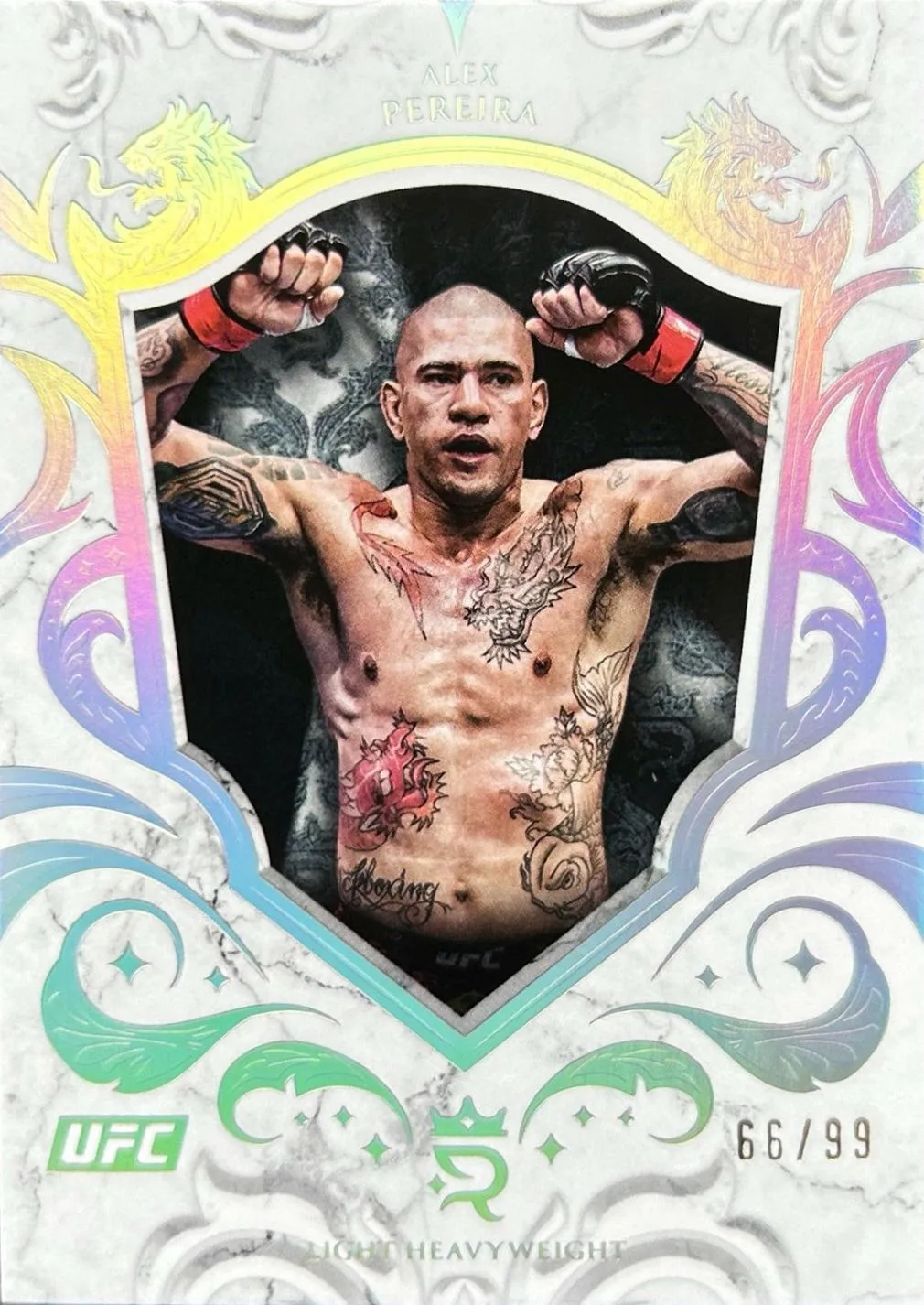
The checklist number, #1, identifies Pereira's card within the set. The serial number, 66/99, identifies this copy within the base edition. Other parallels can share checklist number #1 while having a different print run.
The /99 does not mean only 99 Pereira cards exist across the whole release. It does not tell you how many copies are currently for sale or how many survive in good condition.
Are base cards always common?
Base describes the main set of cards. It does not guarantee a large print run. In 2025 Topps Royalty UFC, even Pereira's base card is numbered to 99.
A parallel is another version of a card, often with a different colour or finish. These examples from Octagon's catalogue, checked on 1 November 2026, show how the print run changes for the same Pereira card:
These are selected versions, not the complete parallel list. The Royalty base checklist has the full list.
The Gold copy below is stamped 08/10. Its stated print run is smaller than the /99 base edition, although both cards show the same fighter and photograph.
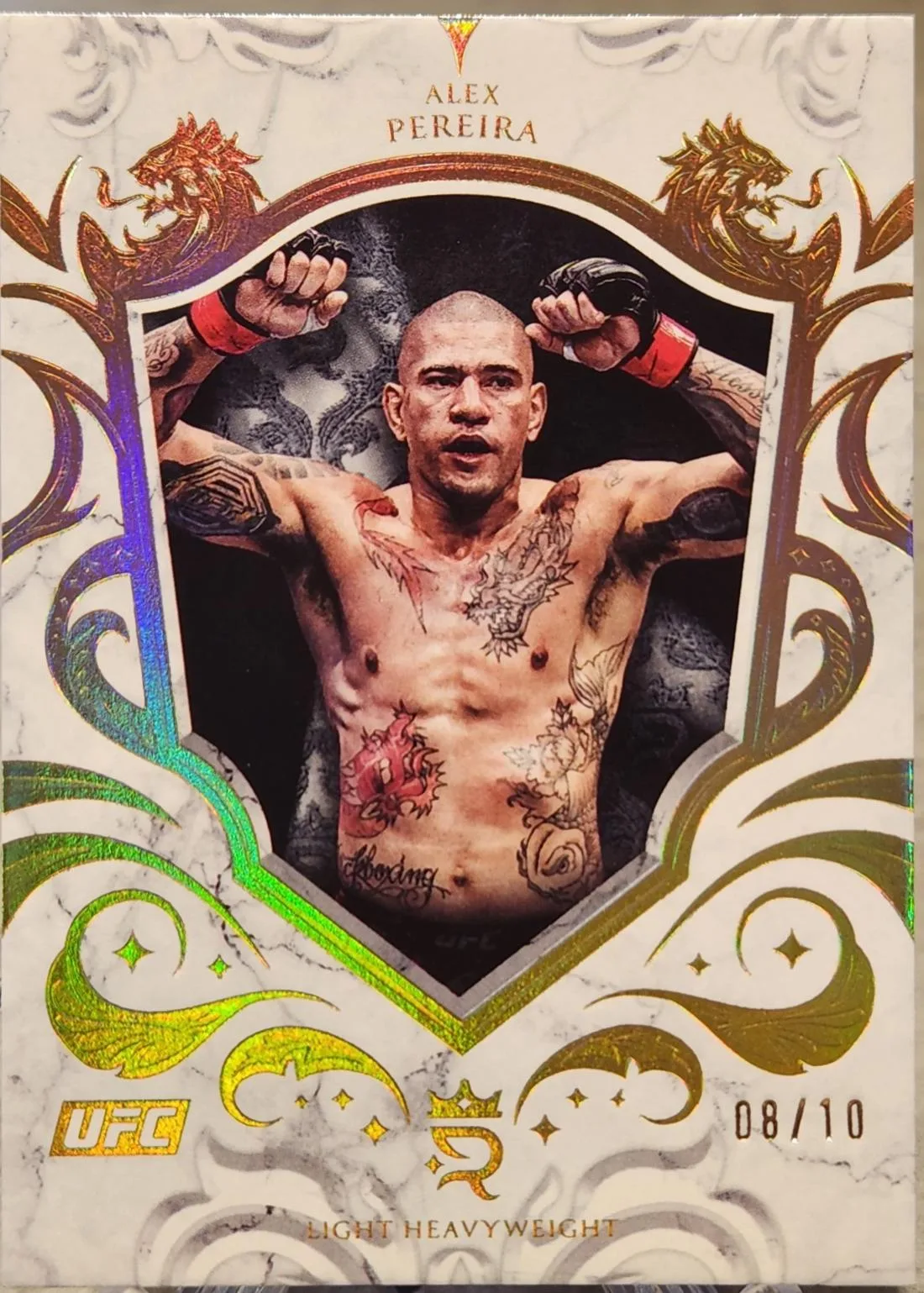
A 1/1 identifies a one-copy edition. A fighter can still have other 1/1 cards in different designs or releases. When comparing two listings, match the release, card number and exact parallel before comparing their numbering.
Does a Gold card always mean /10?
The colour name is specific to its release and card family. Pereira's Royalty Gold above is /10. The 2009 Topps UFC Round 2 #101 Gold card shows Jon Jones against Andre Gusmao. It is unnumbered in Octagon's catalogue as checked on 1 November 2026.

There is no recorded print run for that Jones Gold edition in the catalogue. The Gold name alone does not tell you how many were made. Check the parallel in that release's checklist.
Can an unnumbered UFC card still be rare?
An unnumbered card can still be scarce. Topps defines a short print, usually shortened to SP, as a card produced in smaller quantities than other cards in the same set. The labels SP and super short print, or SSP, indicate scarcity without giving you an exact number of copies.
Look for the manufacturer's checklist, product description or published odds for that card's category. If you cannot find a print run, leave it unknown. Few copies appearing in listings is a reason to investigate, not a reliable count of how many were made.
Published odds describe how often a category is inserted in a specified product format. They do not give an individual fighter's print run by themselves. Check the named card category and box format before using an odds sheet from the Topps odds directory.
Does a rarer card always have a higher price?
Print run describes supply. Price also depends on who wants the card, which version they want and the condition of the copy available. A smaller denominator is not enough to establish a higher value.
For your card, compare sales of the same edition first. If sales are scarce, a single result may be a weak guide to what another buyer will pay. The UFC card valuation guide explains how to read those records and use an estimate without treating it as a guaranteed sale price.
Check your UFC card's rarity with Octagon
Use the Octagon scanner to find a match from a photo, then confirm the year, card number and parallel against your card. The photo identification guide shows what to check when similar versions appear.
If you know the fighter, open their page, such as Pereira's catalogue, and browse to the card. Check its numbering and compare the available parallels. The edition name and your card's actual stamp should agree before you use its sales or estimate.